 Winelingo
Unit 11 of 26 · Online wine course
German Wine Course
Riesling, the Mosel, the Rhine and the warm south. 6 lessons · about 48 min
This unit is included with Premium ($3.99 a month, 3 days free) or the course for life ($39.99 once).
The 6 lessons
-
Germany at a glance: Riesling, rivers and a cool climate
Why Germany's cool climate makes fresh, racy wines, how steep river slopes help grapes ripen, its 13 regions, and Riesling, the star.
You will be able to:
- explain why Germany's cool climate makes fresh wines
- describe how steep river slopes help grapes ripen
- recognise trocken, Riesling and Spätburgunder on a wine list
-
The grapes of Germany: Riesling and beyond
Riesling is Germany's star and Spätburgunder its leading red. Most German labels name the single grape inside, so a handful of names unlocks the list.
You will be able to:
- explain why German labels usually name one grape
- describe Riesling and how Germany's top grape changed
- decode Burgunder names and match grapes to styles
-
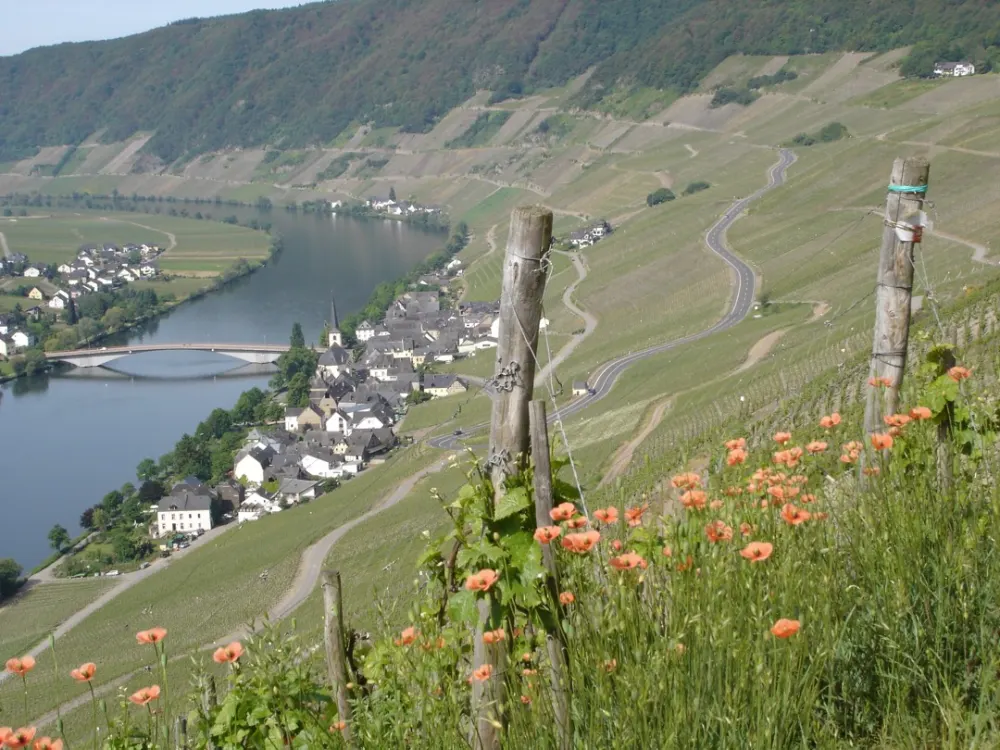
The Mosel: Riesling on steep slate
Why the Mosel's steep slate slopes ripen Riesling in a cool valley, how its light, zesty, low-alcohol wines taste, and which slopes and bottles to look for.
You will be able to:
- explain why Mosel vines grow on steep slate slopes
- describe the light, high-acid style of Mosel Riesling
- name famous Mosel slopes and pick a first bottle
-
The Rhine heartland: Rheingau, Rheinhessen and Nahe
Why a bend in the Rhine makes Rheingau Riesling fuller, how huge Rheinhessen grew up, and why the small Nahe is a patchwork of rocks.
You will be able to:
- explain why the Rheingau's vineyards are sunny and sheltered
- describe Rheinhessen's rise and its red-slope Riesling
- rank Rhine heartland wines from everyday to famous
-
Pfalz, Baden and Franken: Germany's warmer south
Germany's sunnier south makes riper, fuller wines: dry Riesling in the Pfalz, Pinot grapes in Baden and earthy Silvaner in Franken.
You will be able to:
- explain why Germany's south makes riper, fuller wines
- match Pfalz, Baden and Franken to their signature grapes
- read the south's price ladder from everyday to GG
-
Reading a German label: from village to small print
Read a real German bottle: village and vineyard names, the 2021 law's ladder, the VDP eagle, the small print on the back and Sekt.
You will be able to:
- read a German village and vineyard name
- place a wine on the law's and the VDP's ladders
- decode a German front label, back label and Sekt
Related reading on Winelingo: Wine of Germany